
Wabularoo Naughtoni
| Wabularoo naughtoni Temporal Range: Early Miocene | |
 | |
| Classification | |
| Genus | Wabularoo |
| Species | W. naughtoni |
| Fossil record | |
| Fossil range | Early Miocene |
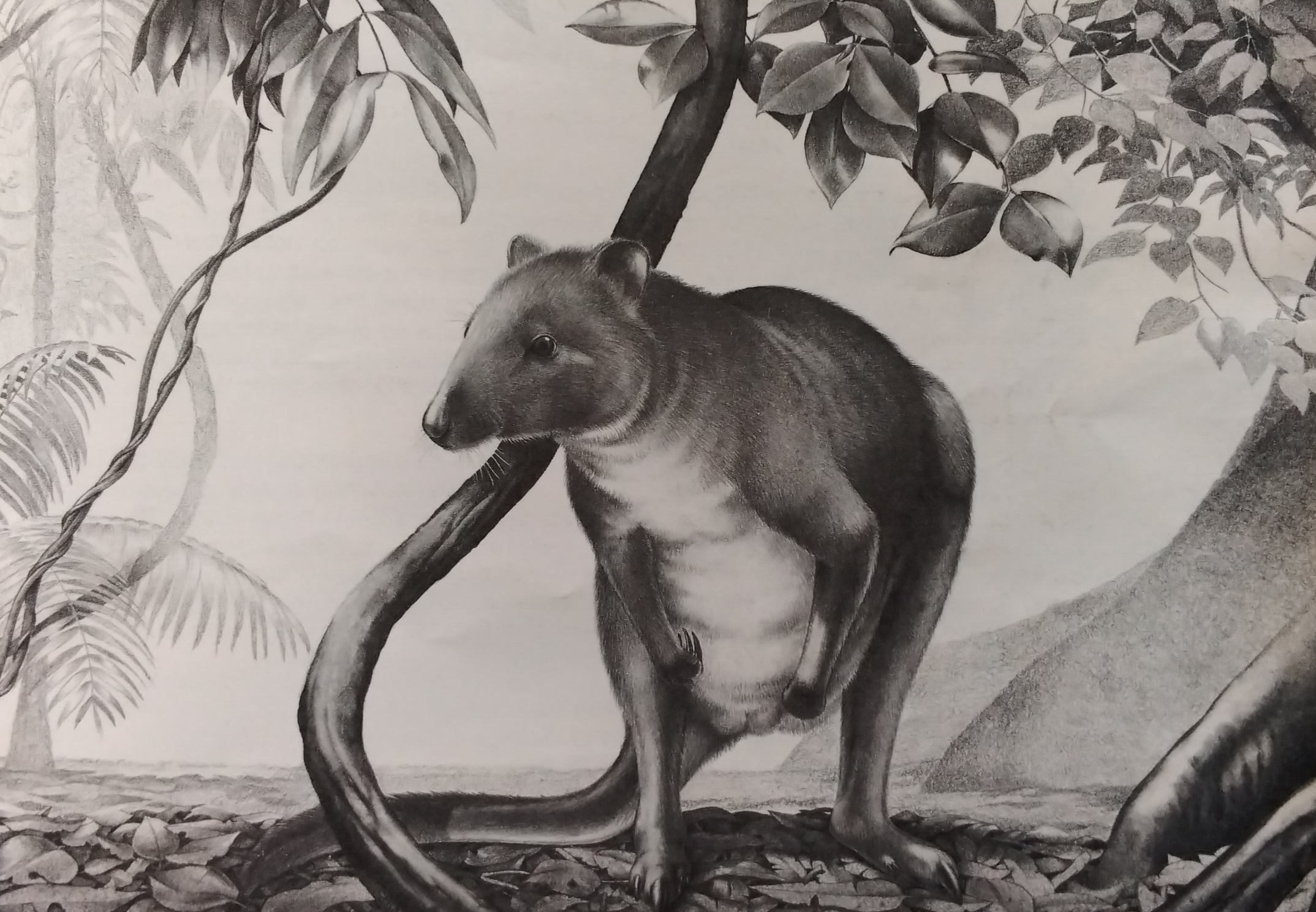
Wabularoo naughtoni is an extinct species of kangaroo considered one of Australia's oldest fossil kangaroos. The genus name "Wabula" means "long time ago" in the language of the Aboriginals of Queensland’s Gulf Country, making Wabularoo an appropriate name for the species. Fossils of this species were discovered at Riversleigh Station, northwestern Queensland, and are estimated to be approximately 14 million years old.
Description
At the time Wabularoo naughtoni existed, most of Australia experienced higher rainfall, and areas like Riversleigh may have supported much wetter forests than today. Wabularoo naughtoni was a small, primitive kangaroo weighing 5–10 kilograms, making it one of the larger species discovered from this period.
Among other kangaroo fossils found at Riversleigh, there are examples of primitive rat-kangaroos and extinct subfamilies. The smallest of these kangaroos was a close relative of Wabularoo naughtoni and was about the size of a bandicoot.
Evolutionary Significance
Wabularoo naughtoni appears to be related to modern rat-kangaroos (Potoroidae) but has enough unique traits to be placed in a separate subfamily. The species' molars resemble those of true kangaroos, suggesting it represents an early "experiment" in evolutionary adaptation to ecological niches similar to today’s browsing kangaroos, such as the forest wallabies of New Guinea.
The extinction of Wabularoo naughtoni and its relatives is believed to have occurred during the late Miocene period, 5–10 million years ago, when more advanced browsing kangaroos evolved.
Taxonomy
• Class: Mammalia
• Infraclass: Marsupialia
• Order: Diprotodontia
• Family: Potoroidae
• Genus and Species: Wabularoo naughtoni
[1]