
Rhabdosteidae
| Rhabdosteidae Temporal Range: Middle Miocene | |
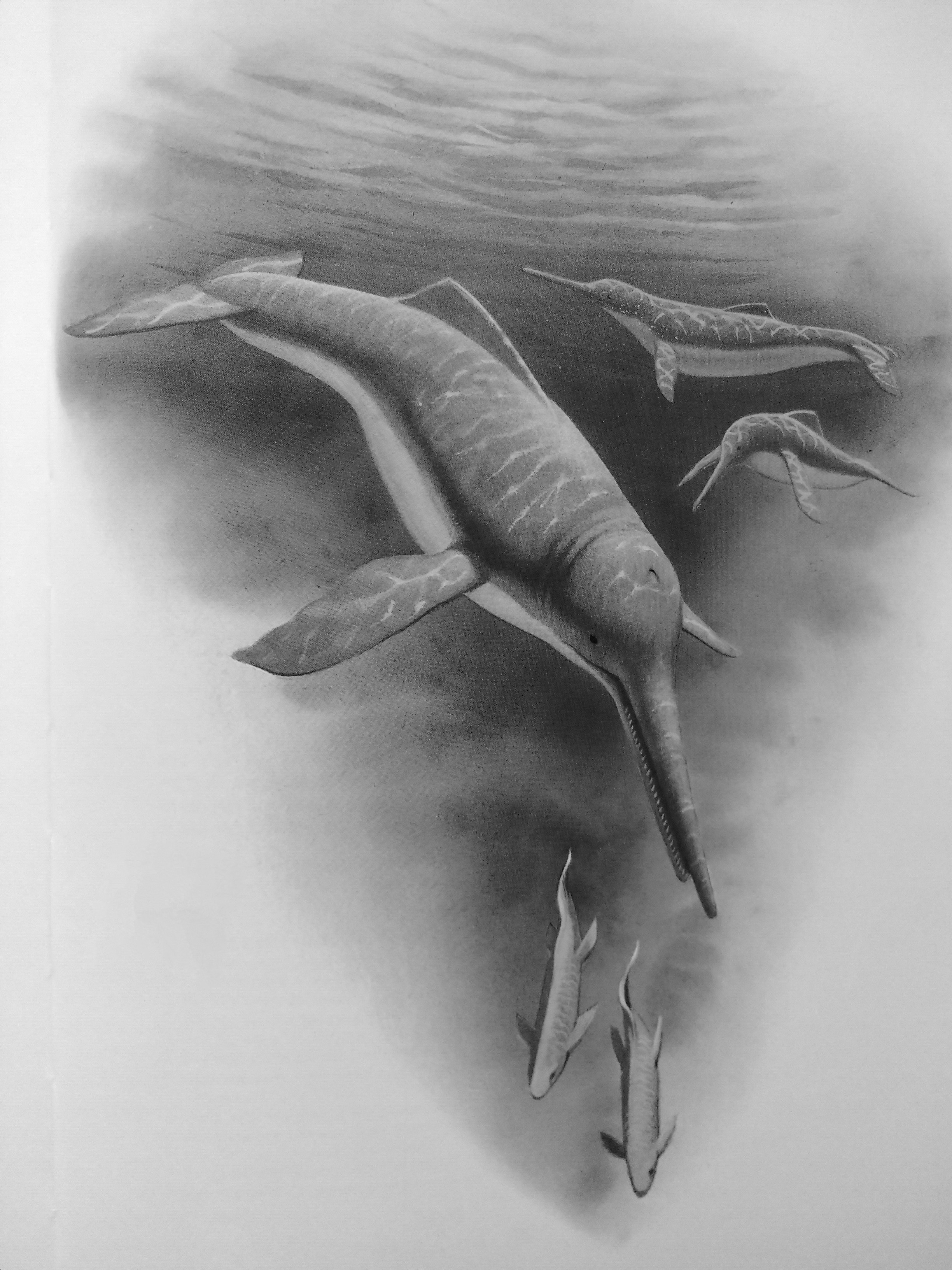 | |
| Lake Frome Freshwater Dolphin | |
| Classification | |
| Genus | Indeterminate at present |
| Fossil record | |
| Fossil range | Middle Miocene |
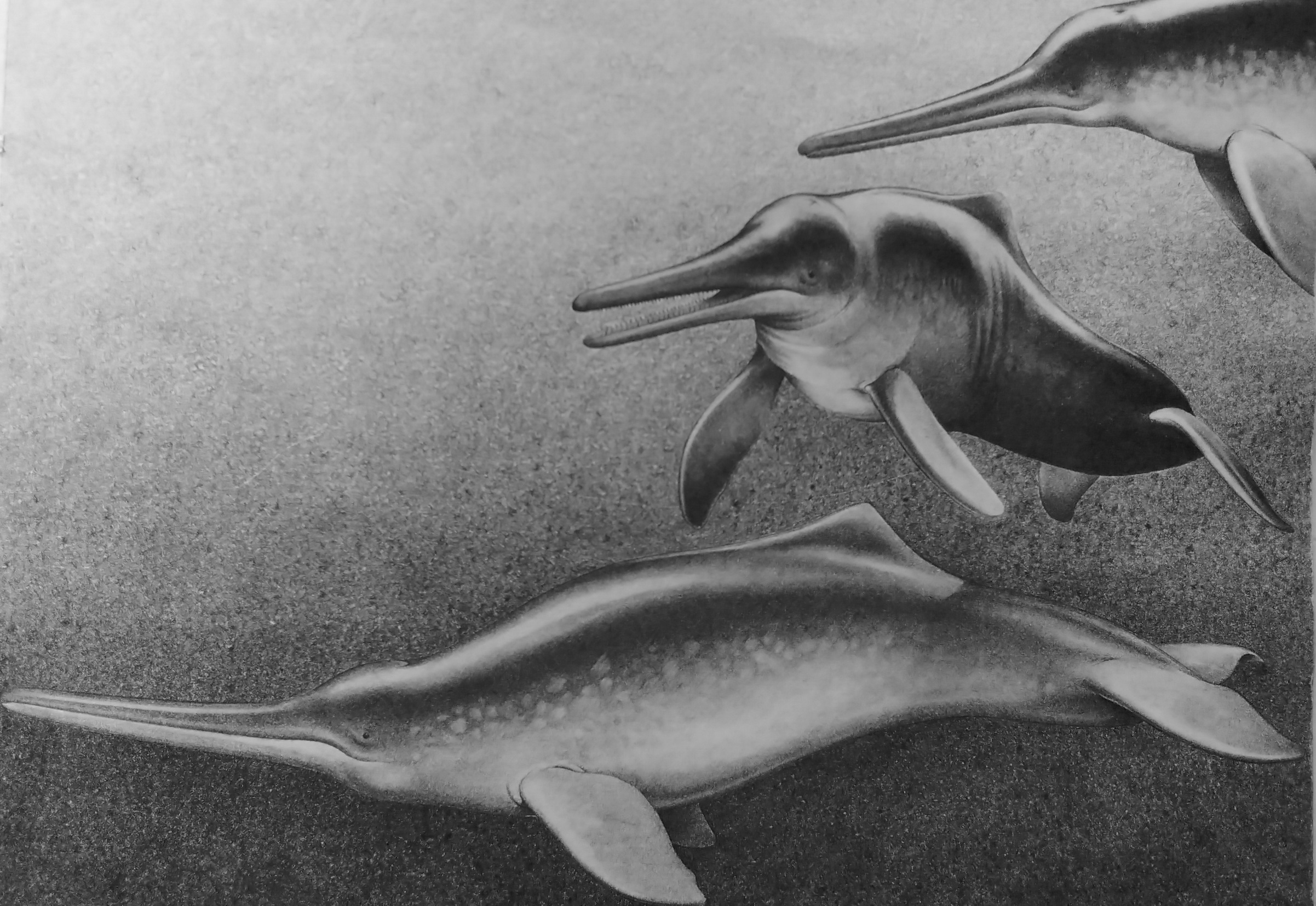
The Lake Frome Freshwater Dolphin is an extinct species of dolphin from the Middle Miocene period found in the Lake Frome region of South Australia. This species belongs to the extinct family Rhabdosteidae and is unrelated to the modern Platanistidae family of river dolphins.[1]
Description
Fossils of the Lake Frome freshwater dolphin were first discovered by Pat Rich and Rod Wells in June and July 1971. Further discoveries were made between 1973 and 1980 by teams from the American Museum of Natural History, the Museum of Victoria, and
the South Australian Museum.[2]
This species is represented by distinct bones, including small, hard, erosion-resistant ear bones known as periotics, as well as teeth, vertebrae, and other skeletal fragments. No complete skeleton has been found, but certain characteristics suggest similarities to the extinct genus Eurhinodelphis. The skull of this species may have measured over one meter in length.[3]
Habitat and Ecology
The Lake Frome dolphins were adapted to freshwater environments, likely inhabiting an external drainage system connected to the Murray River. Their morphology suggests that they were efficient predators, feeding on fish and invertebrates. They likely had social behavior, forming small schools.[4]
References
- Kadimakara: Extinct Vertebrates of Australia, by P.V. Rich, G.F. van Tets, F. Knight, 1990, P.259–260.
- Kadimakara: Extinct Vertebrates of Australia, by P.V. Rich, G.F. van Tets, F. Knight, 1990, P.259.
- ''Kadimakara: Extinct Vertebrates of Australia'', by P.V. Rich, G.F. van Tets, F. Knight, 1990, P.259–260.
- Kadimakara: Extinct Vertebrates of Australia, by P.V. Rich, G.F. van Tets, F. Knight, 1990, P.260.