
Lawrence Hargrave

Lawrence Hargrave /ˈlɔːrəns ˈhɑːɡreɪv/ (1850–1915) was an aviation pioneer, born in Greenwich, England. He migrated to Sydney,
| Lawrence Hargrave | ||
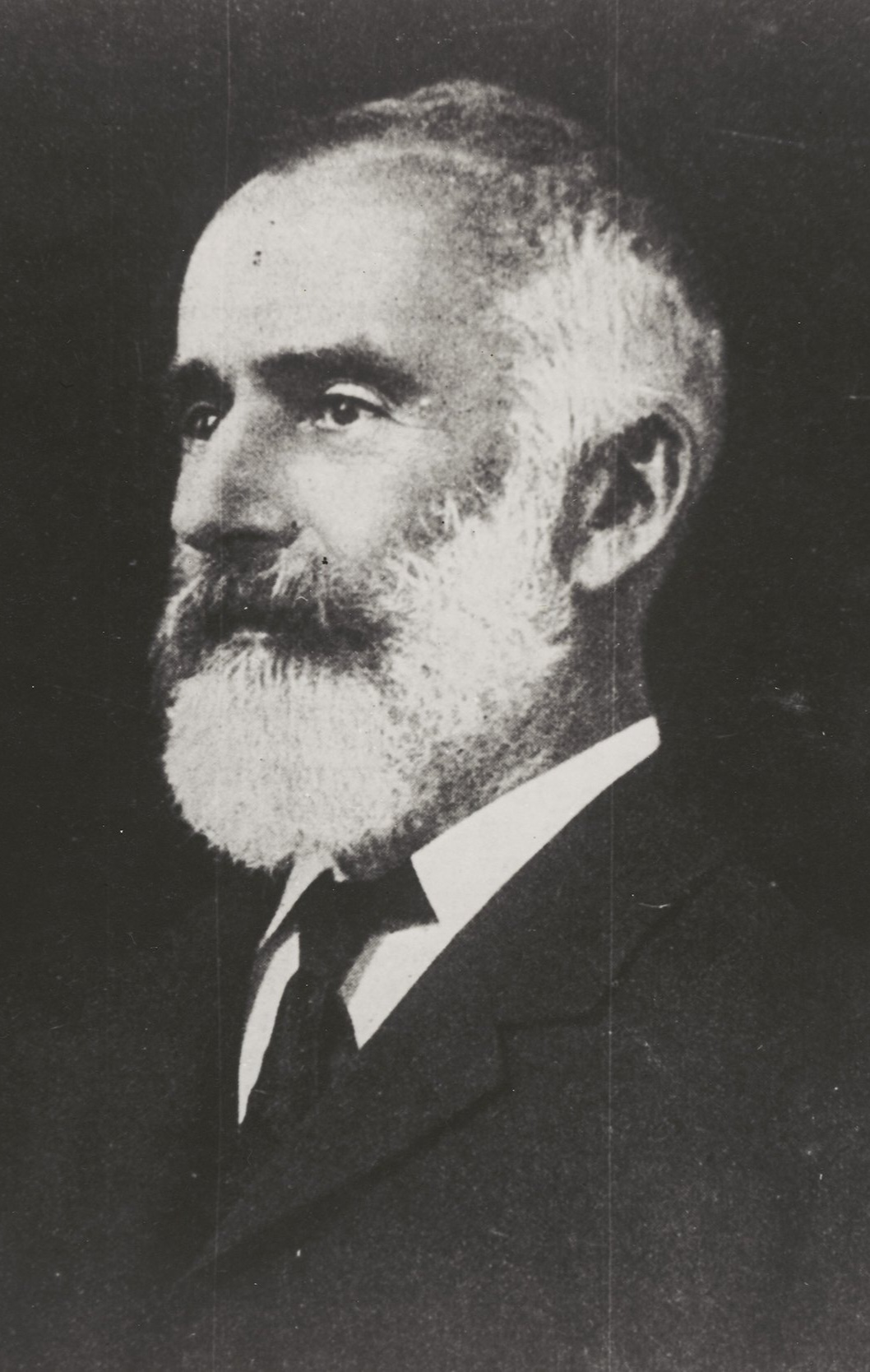 | ||
| Lawrence Hargrave, aviation pioneer | ||
| Born | Lawrence Hargrave Born January 29, 1850 Greenwich, England | |
| Died | Died July 6, 1915 (aged 65) Sydney, New South Wales, Australia | |
| Nationality | British (Australian resident) | |
| Known for | Pioneer of aviation, inventor of box kites | |
| Occupation(s) | Explorer, inventor, aviation pioneer | |
| Years active | 1876–1915 | |
| Spouse(s) | Margaret Preston Johnson (m. 1878) | |
| Children | 6 | |
| Notable works | Box kite, contributions to early aviation | |
Australia, with his family in 1857. After completing his education, Hargrave worked as a draftsman before switching careers. At the age of 21, he began participating in explorations in northern Queensland, where he survived both a shipwreck and an attack by Aboriginals.
In 1876, Hargrave joined Luigi Maria D'Albertis on an expedition covering approximately 1,062 kilometers (660 miles) along the Fly River in New Guinea. By 1877, Hargrave had become a regular observer at the Sydney Observatory. Hargrave's significant contributions to aviation include his work with box kites, which laid the groundwork for further developments in flight. He was known for his open approach to invention, refusing to patent his innovations to allow others to build on his ideas.[1]
Biography
Lawrence Hargrave was an Australian pioneer in the field of aeronautics, known for his crucial experiments and designs in powered flight. Although his father, a prominent judge, had intended for him to enter the legal profession, Hargrave's passion was in engineering. After apprenticing with the Australian Steam Navigation Company, he honed his skills in woodworking and metalworking, abilities he would later apply to his experimental work in aviation. In the early stages of his career, Hargrave embarked on several expeditions in northern Queensland and New Guinea. However, he returned to Sydney in 1878, where he began working as an observer at the Sydney Observatory. This employment gave him the independence to pursue his growing interest in aeronautics.
Aviation Innovations
Hargrave's work focused on creating practical flying machines. His early experiments included building a model ornithopter—a machine powered by flapping wings mimicking the flight of birds—which achieved a brief flight on December 31, 1884. Despite this accomplishment, Hargrave eventually abandoned ornithopters and focused on fixed-wing designs. His contributions to aviation included work on radial rotary engines, which would later become critical to aircraft design, and experiments on kites, gliders, and the principles of lift.
Key Inventions
In 1894, Hargrave linked four box kites to lift himself 4.8 meters off the ground, effectively demonstrating the potential of kite-based designs in powered flight. His insights into the importance of the curved wing, or aerofoil, were later applied by the Wright brothers in their successful flights. Hargrave also designed various engines, including a turbo-jet, but many of his steam and kerosene engines were ultimately unsuccessful. Despite his many setbacks, Hargrave's persistence laid important groundwork for the future of aviation, influencing early 20th-century pioneers in the field. However, due to a lack of financial support, Hargrave eventually ceased his experimental work in 1909. He passed away in 1915, but his legacy in aviation remains recognized globally.[2]