
Apollo 11
| Australian involvement in the Apollo 11 mission | ||
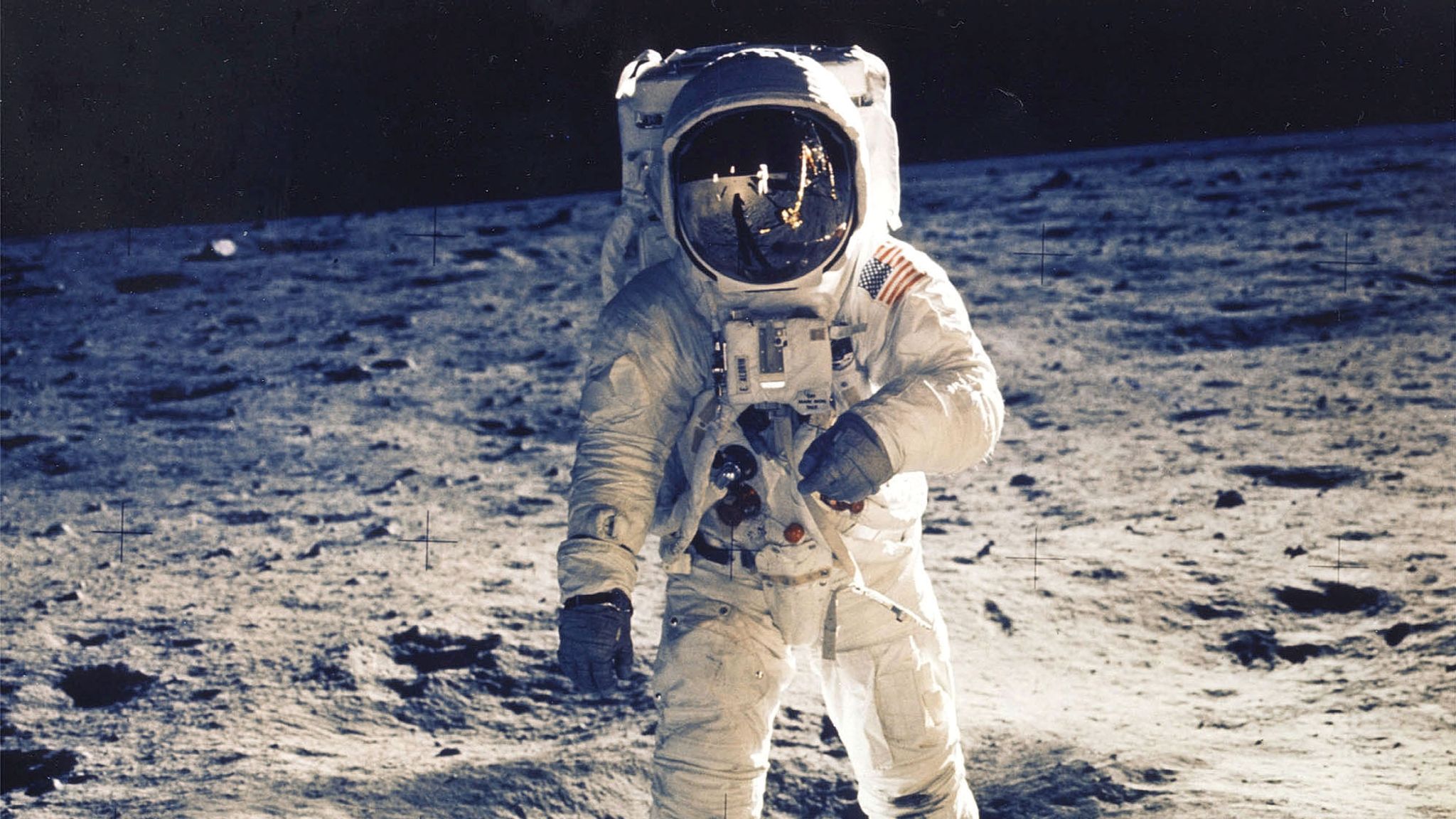 | ||
| Apollo 11 | ||
| Country | Australia | |
| agency | NASA (with CSIRO and Department of Supply) | |
| Role | Space tracking and communication support | |
| facilities | Parkes Radio Telescope, Honeysuckle Creek, Tidbinbilla | |
| key_contributions | Reception of lunar surface television signals during the first Moonwalk | |
| Duration | July 1969 | |
| outcome | Successful relay of historic footage to the world | |
| Significance | Provided prime reception for Neil Armstrong's first steps on the Moon | |
Australian involvement in the Apollo 11 mission refers to the contributions made by Australian facilities and personnel in supporting NASA's historic first crewed lunar landing in July 1969. Australia hosted several key NASA tracking stations and leveraged its radio astronomy expertise, particularly through the Parkes Radio Telescope, to ensure reliable communication and data reception during critical phases of the mission. This involvement was crucial for relaying live television footage of the astronauts' activities on the Moon's surface to a global audience.
Background
Australia's participation in space tracking began in the late 1950s with facilities established for early U.S. satellite programs. By the 1960s, the country had become a vital hub for NASA's Deep Space Network (DSN) due to its geographic position, which allowed for continuous coverage of spacecraft as Earth rotated. Key sites included the Tidbinbilla station near Canberra, opened in 1965, and Honeysuckle Creek, established in 1967 specifically for the Manned Space Flight Network (MSFN). These were operated under a 1960 bilateral agreement between the U.S. and Australian governments, where NASA funded construction and Australia handled operations and maintenance.[1] The Parkes Radio Telescope, a 64-meter dish operated by the Commonwealth Scientific and Industrial Research Organisation (CSIRO), was not originally a NASA facility but its design influenced DSN antennas worldwide. Completed in 1961, it had previously supported unmanned missions like Mariner 2 and 4, demonstrating its capability for deep space signal reception.[2]
Planning and Preparation
For Apollo 11, NASA sought additional support from Parkes to back up its primary stations during the lunar extravehicular activity (EVA). The telescope's larger dish offered superior sensitivity for weak signals from the Moon. In October 1968, CSIRO agreed to participate, recognizing the mission's historic importance. Parkes was linked by microwave to Tidbinbilla and Honeysuckle Creek for real-time data sharing.[3] The original mission timeline had the EVA occurring before the Moon rose over Parkes, positioning it as a backup. However, a revised plan incorporating a rest period for astronauts Neil Armstrong and Buzz Aldrin shifted the start to when the Moon would be high over Australia, elevating Parkes to the primary receiver for the broadcast.[4] A fire at Tidbinbilla's transmitter days after launch further adjusted roles, with Honeysuckle Creek focusing on telemetry.[5]
Mission Support During Lunar Landing and EVA
On July 21, 1969 (Australian Eastern Standard Time), the Lunar Module Eagle landed at 6:17 a.m. Delays in suiting up pushed the EVA start closer to Moonrise at Parkes. As the Moon rose, severe winds gusting over 110 km/h battered the fully tilted telescope, exceeding safety limits and shaking the control tower. Despite the risk, operations continued as the weather improved.[6] Parkes began receiving signals using an off-axis detector just as Aldrin activated the lunar camera at 12:54 p.m. Eight minutes later, the main detector locked on, providing high-quality images. Meanwhile, Honeysuckle Creek and Goldstone in California also tracked the signals. NASA initially broadcast from Goldstone and then Honeysuckle Creek, capturing Armstrong's famous first step. After 8 minutes and 51 seconds, they switched to Parkes' superior feed, which remained the source for the rest of the 2.5-hour EVA.[7] Honeysuckle Creek provided the initial global view of Armstrong's descent, while Parkes ensured clarity for the majority of the broadcast, watched by an estimated 600 million people worldwide.[8]
Legacy and Recognition
Australia's facilities played a pivotal role in the success of Apollo 11's communication needs, highlighting the importance of international cooperation in space exploration. The events inspired the 2000 film The Dish, which dramatized Parkes' involvement. In gratitude, NASA granted CSIRO $90,000 to upgrade the telescope's surface for higher-frequency operations.[9] Australian stations continued supporting later Apollo missions, including emergency aid during Apollo 13. The Tidbinbilla complex remains active in DSN today, underscoring Australia's enduring contribution to solar system exploration.[10]
References
- Dougherty & Sarkissian, 2002, p. 14
- Dougherty & Sarkissian, 2002, p. 16
- Dougherty & Sarkissian, 2002, p. 23
- Dougherty & Sarkissian, 2002, p. 23
- Dougherty & Sarkissian, 2002, p. 23
- Dougherty & Sarkissian, 2002, p. 24
- Dougherty & Sarkissian, 2002, p. 24
- Dougherty & Sarkissian, 2002, p. 24
- Dougherty & Sarkissian, 2002, p. 25
- Dougherty & Sarkissian, 2002, p. 27