
Allosaurus
| Allosaurus Temporal Range: Early Cretaceous | |
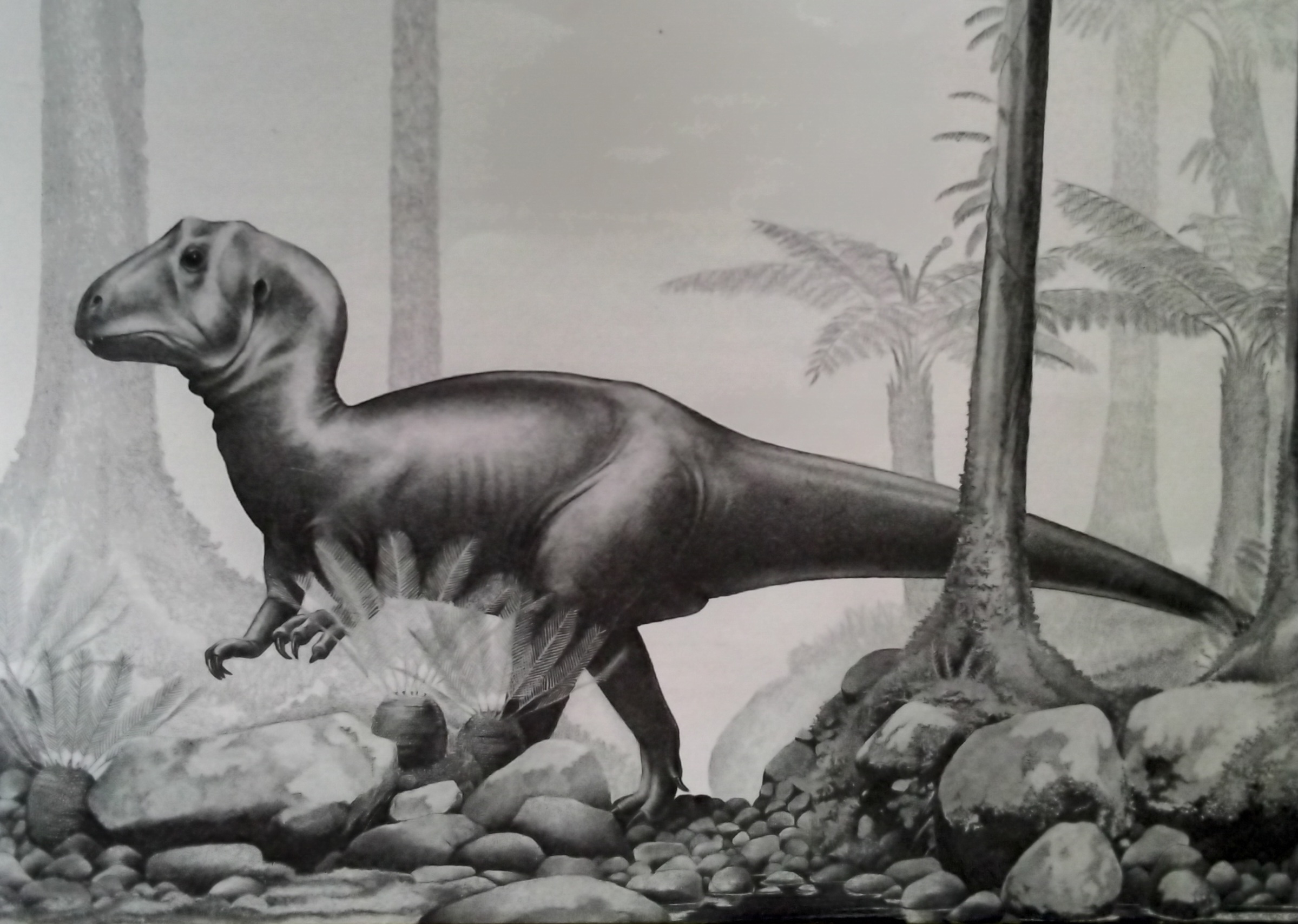 | |
| Allosaurus | |
| Classification | |
| Genus | Allosaurus |
| Species | Allosaurus fragilis |
| Fossil record | |
| Fossil range | Early Cretaceous |
Allosaurus is a genus of theropod dinosaur within the family Allosauridae. It was one of the largest and most impressive carnivores of its time, growing up to 10 meters in length and nearly 4 meters in height. Despite their massive size, Allosaurus had a brain approximately the size of a cat's, suggesting limited intelligence.
Characteristics
The name Allosaurus translates to "different lizard," reflecting the unique skeletal features of its fossils compared to other known dinosaurs of the time. These carnivores were capable of preying on other large dinosaurs, including Apatosaurus (formerly Brontosaurus).
During the Jurassic and Cretaceous periods, Allosaurus thrived globally due to connected landmasses and uniform climates. This distribution allowed the genus to inhabit various environments and prey on diverse species.
Australian Allosaurus
The Australian species of Allosaurus is represented by a single ankle bone found in Early Cretaceous rocks in Victoria, Australia, near Inverloch. The bone was preserved alongside smaller herbivorous dinosaur remains in sandstone formations. This particular Allosaurus species is estimated to be around 125 million years old, making it one of the last surviving species of the genus. In contrast, other Allosaurus species became extinct at the end of the Jurassic period, approximately 135 million years ago.
Polar Adaptations
Southern Victoria, where the fossil was discovered, lay within the Antarctic Circle during the Early Cretaceous period. Despite the high latitude, the absence of polar ice caps allowed diverse plant and animal life to flourish. The region may have acted as a refuge for species that became extinct elsewhere during this time.
Significance
The Victorian Allosaurus fossil is significant as it represents the last known surviving member of the genus. This discovery sheds light on the adaptability and distribution of theropod dinosaurs during the Early Cretaceous.[1]